
By Larry Judkins
Glenn County Observer
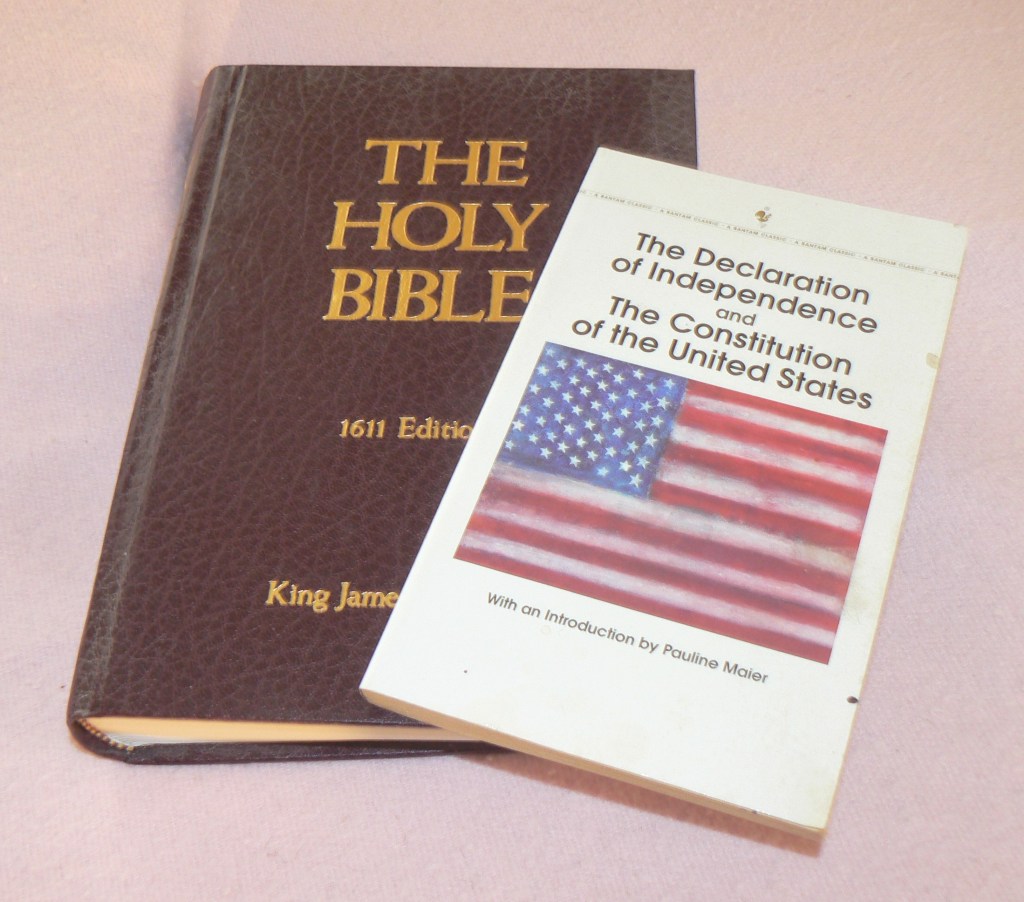
It is often said that the Constitution of the United States was founded on Judeo-Christian values.
Since very few of the leading Founding Fathers who drew up the Constitution were Christians in the modern sense, I have always been very skeptical of this claim. Why would non-Christians and heretical Christians (in the eyes of modern theologically conservative Christians) establish a constitution based on Christianity? Some of the framers of the Constitution were adherents of deism (the belief that God created the universe but then completely removed himself from it and does not actively participate in the affairs of the world); others were unitarians (theists who reject the Christian Doctrine of the Trinity); and still others were universalists (believers who reject the doctrines of hell and eternal punishment).
If, for some mysterious reason, the Founding Fathers did intend for the Constitution to be a Judeo-Christian document, then one would expect it to reflect the principles found in the Bible. That is, if the Constitution really is based on Judeo-Christian values, then the various clauses in the Constitution should in general be consistent with biblical tenets, and should seldom, or never, contradict the Bible. For example, the Constitution established a republican form of government. Therefore, if the Constitution is a Judeo-Christian document, then one would expect to find references in the Bible that support republicanism.
This, however, is not the case. The first several books in the Hebrew Bible (what most Christians call the Old Testament) say absolutely nothing about republicanism, but clearly advocate a highly authoritarian theocracy headed by an almost omnipotent priesthood. The later books of the Hebrew Bible also say nothing at all about republicanism but promote the idea that political power should be shared by a priesthood and a monarch. As for the New Testament, its authors looked forward to the establishment of a theocratic monarchy headed by the Messiah. Like the rest of the Bible, the New Testament is completely silent about republican forms of government.
The Constitution also established the concept of trial by a jury of one’s peers. Surely an idea such as this, so fundamental to our supposedly Judeo-Christian Constitution, can be found in the Bible! The Bible refers to disputes being settled by priests and other religious leaders (see, for instance, Numbers 15:32-36); by tribal leaders and judges (Exodus 18:13-26); and by monarchs (1 Kings 3:16-28). Although Numbers 5:11-31 even promotes the morally repugnant concept of trial by ordeal, one cannot find a single verse in the Bible that supports the idea of trial by a jury of one’s peers.
The First Amendment to the Constitution provides for freedom of religion. Does this principle come from the Bible? While the First Amendment guarantees religious freedom, the First Commandment expressly forbids it (see Exodus 20:3 and Deuteronomy 5:7). The worship of any god except Yahweh was punishable by death (Deuteronomy 13:9), as was the crime of blasphemy against Yahweh (Leviticus 24:16).
As a final example, the Eighth Amendment forbids the infliction of “cruel and unusual punishments”. Is this derived from the Bible? Sadly, the Bible indicates that God supposedly instituted many different types of cruel and unusual punishments, including execution by burning (Leviticus 20:14 – “And if a man take a wife and her mother, it is wickedness: they shall be burnt with fire, both he and they; that there be no wickedness among you.”); execution by stoning (among many other examples, Deuteronomy 21:21 – “Then all the men of [a father’s] city shall stone [his stubborn and rebellious son] with stones, that he die: so shalt thou put evil away from among you; and all Israel shall hear, and fear.”); and whipping with up to 40 lashes those individuals who were found guilty of non-capital crimes (Deuteronomy 25:2-3 – “And it shall be, if the wicked man be worthy to be beaten, that the judge shall cause him to lie down, and to be beaten before his face, according to his fault, by a certain number. Forty stripes he may give him, and not exceed: lest, if he should exceed, and beat him above these with many stripes, then thy brother should seem vile unto thee.”). The Bible also requires the amputation of a woman’s hand for any wife who tried to defend her husband by grabbing his enemy’s genitals (Deuteronomy 25:11-12 – “When men strive together one with another, and the wife of the one draweth near for to deliver her husband out of the hand of him that smiteth him, and putteth forth her hand, and taketh him by the secrets: Then thou shalt cut off her hand, thine eye shalt not pity her.”).
Clearly, we see that there is absolutely no basis for the claim that the Constitution was founded on Judeo-Christian values. In truth, the Constitution was the product of the thinking of the European Enlightenment, not of ancient Judaism and Christianity. The Enlightenment, of course, represented a major step toward secularism and away from religious dogma.
This would explain why the Constitution does not even mention God or Jesus Christ, and provides for the complete separation of state and church.
 The Glenn County Observer